Do you know what your child is actually watching?
Not what you think they are watching. What is actually turning up on their phone right now, in a feed built just for them that you'll never see. It's not just reflecting who your child is. It's quietly shaping who they are becoming. The question isn't whether that's happening, it's whether you'll know about it before it matters.
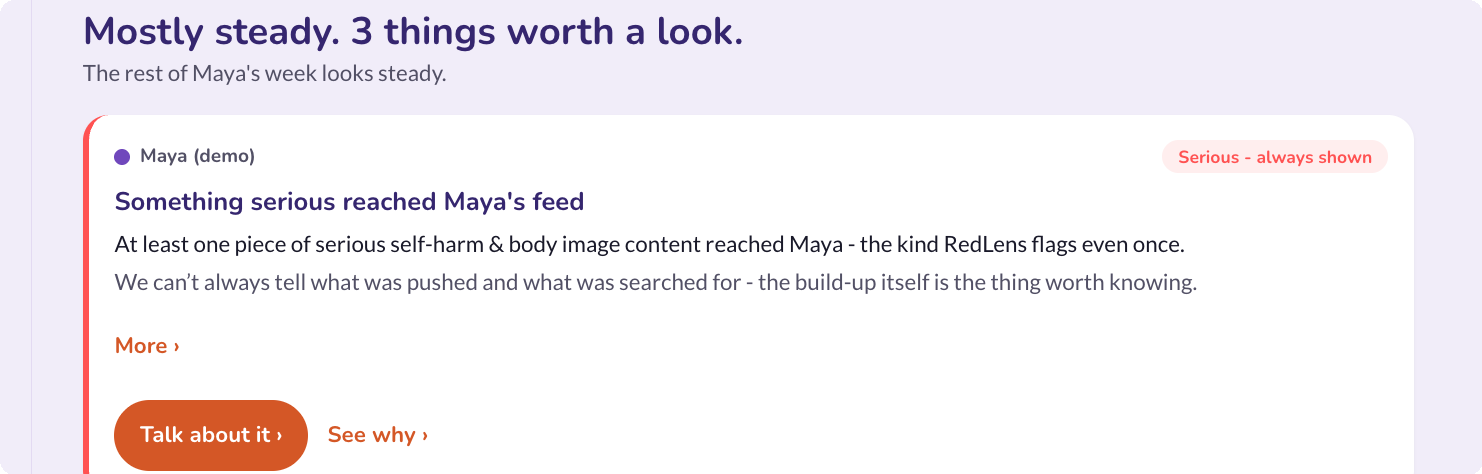
The feed is invisible by design
Every child's feed, on whichever platforms they live on, is personalised to them alone. Nobody else, not you, not their teacher, not anyone who actually knows your child, sees what they see. You can ask them. You can look over their shoulder now and then. But the feed doesn't wait for you to catch up. It reshapes itself around whatever keeps your child watching, not around what is good for them.
That's not a parenting failure. It's the product.
RedLens gives you that visibility back
RedLens connects to your child's YouTube and TikTok in minutes, and turns their feed into something you can actually understand and act on. Not a wall of raw data, not a spy log, just a clear picture and a way in.
- See. A clear, simple view of the themes, patterns and risks turning up in your child's feed, across 24 areas, from the obvious (violence, self-harm) to the ones parents don't always think to ask about (vaping, body image, extremism).
- Talk. Real conversation starters, built from the signals in their feed and tied to what is actually in the news, not an accusation, not "I've been checking your phone," just a natural way in.
- Shift. Real-world suggestions and activities that align with what they are watching, connecting with them through the things they love.
The impact is low.
Nothing is blocked, nothing is removed, and your child's feed keeps working exactly as it always has. The only thing that changes is what you can see, and how you're able to engage because of it.
A ban can't tell the difference
A blanket ban treats something useful or educational exactly the same as something actually harmful, and it shuts the conversation down instead of opening it up. RedLens doesn't shut the door. It gives you the signals to understand what is happening as it happens, and opens up the conversation at the right time.
Not surveillance. Not a ban. Just the visibility you never had.
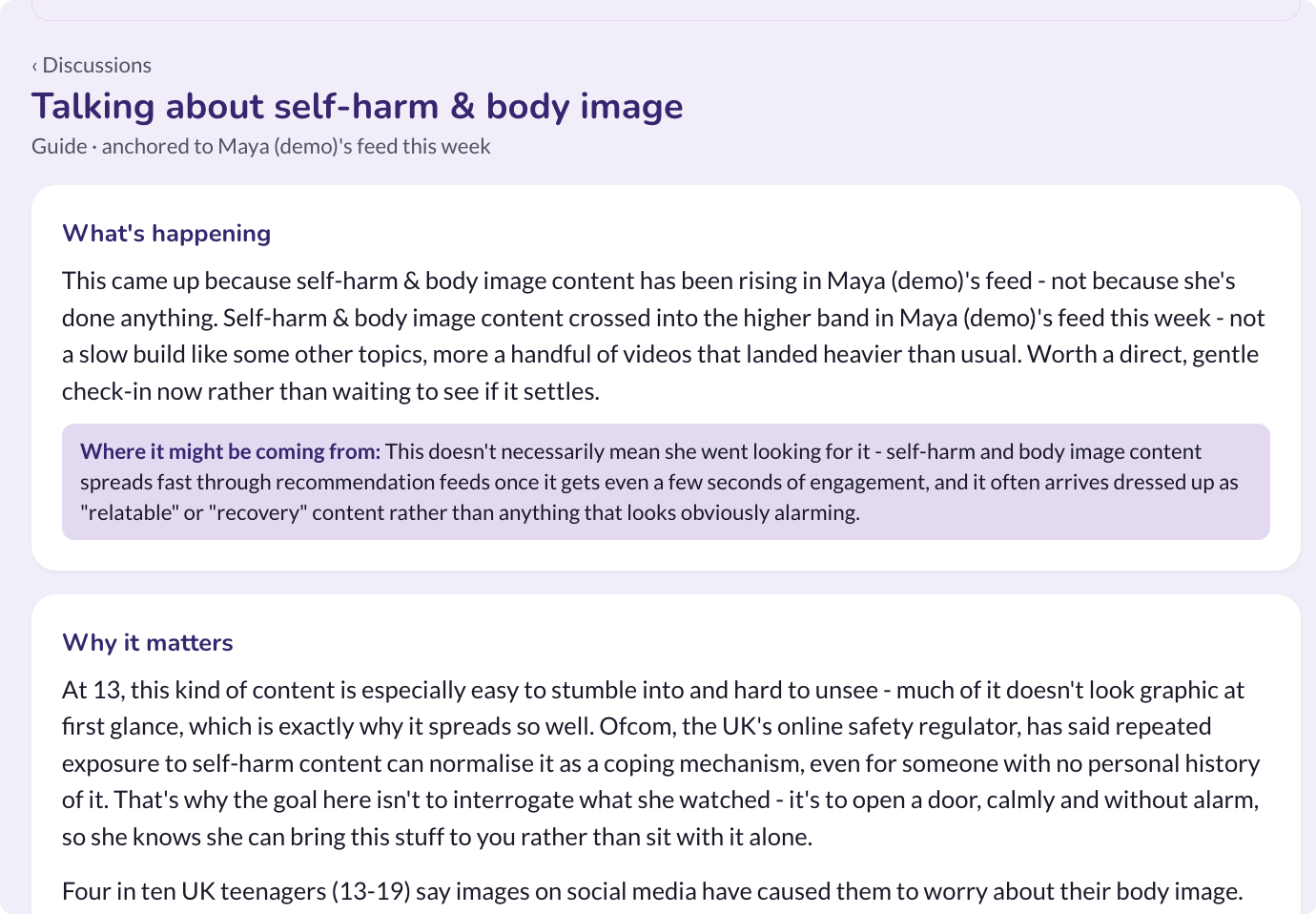
What this looks like in practice
One parent noticed her 14-year-old was starting to get curious about vaping. The signals in his feed showed a sudden, sustained pattern of vaping content: natural teenage curiosity taking hold. RedLens flagged it early, while the curiosity was still forming. It provided a conversation guide: insight into the dangers, how to have the discussion, and a link to a current news article on the trend. That gave her a natural way in over dinner, instead of a confrontation: not "I saw what you're watching," just "have you seen this?" No lecture. No drama. Just a way in, at exactly the moment it mattered.
What RedLens works with today
RedLens currently connects to YouTube and TikTok, with more platforms on the way. One platform we're being upfront about: Meta (Instagram, Facebook, WhatsApp) does not currently give parents or tools like RedLens meaningful access to a child's data, which is itself worth knowing.
Get early access
RedLens is close to ready for its first families. Early access is free, and there's no commitment.